Projetos
Project outputs
NEBI - Enabler Toolkit (Portuguese version)
Inclusive guide to participation in a city
Minecraft tutorial
Youth 4 Bauhaus - Minecraft tutorial (pt)
Full video of the multiplier event available on BMA's Youtube channel.
Youth 4 Bauhaus is a project inspired by the New European Bauhaus (NEB) initiative, launched by the European Commission in October 2020. Rooted in creativity, art, and culture, the New European Bauhaus brings a new dimension to the European Green Deal, with the aim of making it more accessible and relevant to citizens’ everyday lives. It represents a collective effort to promote good practices for building a sustainable, inclusive, and beautiful future, encouraging new ways of living and highlighting the importance of connecting art, culture, and social inclusion with science and technology.
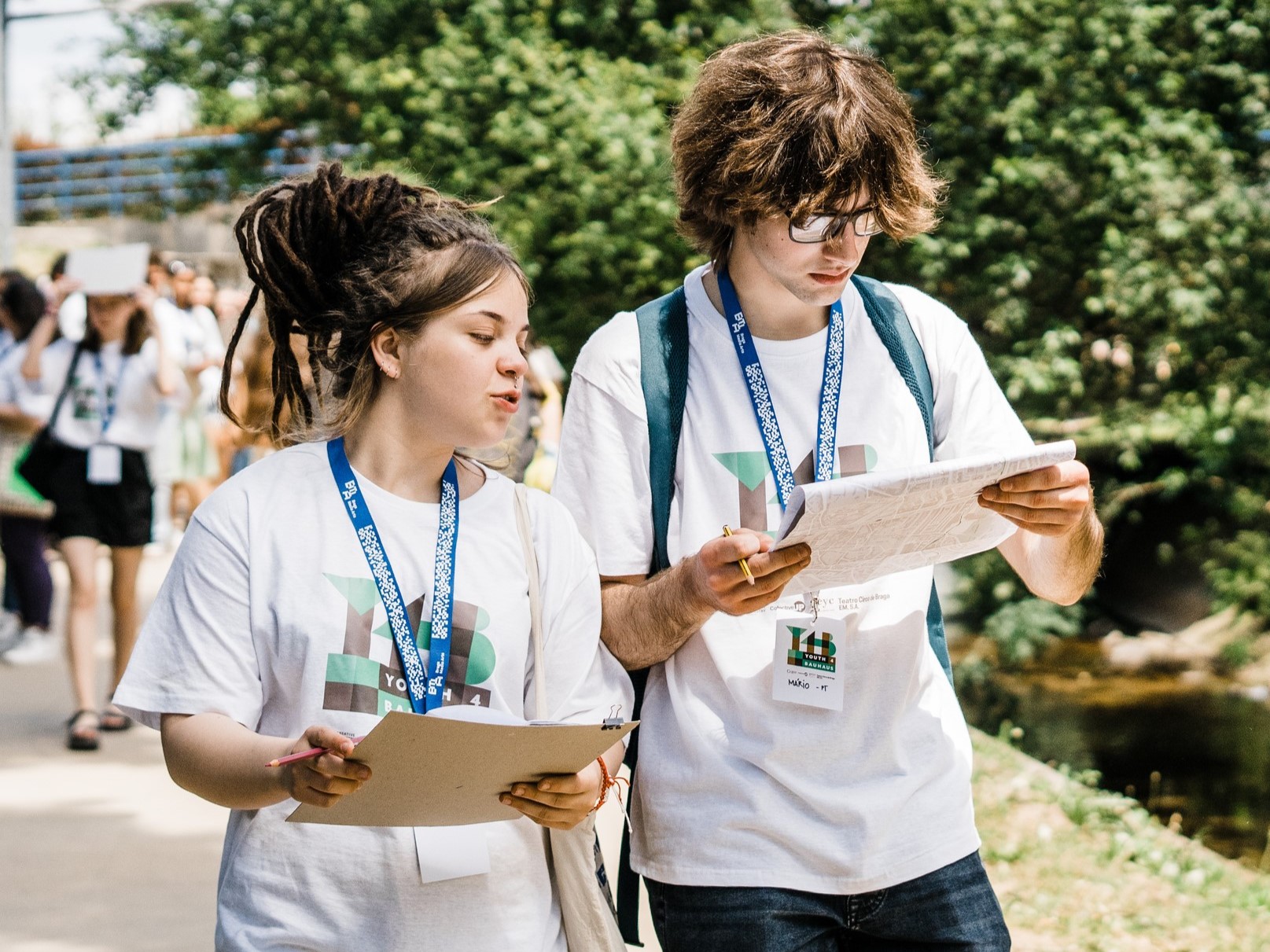
The Youth 4 Bauhaus project seeks to empower young people to actively engage with the changes shaping the cities in which they live. By giving them a voice, the project encourages meaningful participation in discussions around sustainable development, architecture, urban planning, business, sociology, ecology, and culture. A key objective is to involve young people in a critical and constructive reflection on the use of urban public spaces, promoting more sustainable, greener, and inclusive approaches in line with the principles of the New European Bauhaus.
The project will bring together 80 students, including young people with reduced mobility, deaf young people, and young people on the autism spectrum. Participants will be invited to think, debate, and collaborate on concrete urban, environmental, political, social, and cultural challenges across the four participating cities. These activities will take place on site and in real time, supported by pilot digital tools that enable participants to formulate, express, and present their ideas and perspectives. They will also have the opportunity to present and publicly defend their final choices when they visit these cities.
Partners Creative Industry Košice (Slovakia), CollectiveUp (Belgium) and GEYC Association (Romania)
Project funded under the European Union's Erasmus+ programme